Current Projects
Sea Turtle ID
Sea turtles can be identified by the unique scale patterns on the sides of their heads, much like a fingerprint in humans. These natural markings remain largely stable over time, allowing individual turtles to be recognized from photographs alone.
Through our Sea Turtle ID Project, we use photo-identification technology and citizen science observations to build a long-term database of individual sea turtles in Saint Lucia. By matching photographs of the same turtle across months and years, we can gain valuable insights into habitat use, site fidelity and population trends.
This provides a non-invasive, cost-effective approach to monitoring sea turtle populations. Every photograph submitted by divers, snorkelers, fishers, and visitors has the potential to contribute to a better understanding and protection of Saint Lucia's marine wildlife.
Why does it matter?
Tracking Individual Turtles
By identifying individual turtles, we can follow the same animals over months and years and better understand their behavior and habitat use.
Identifying Important Habitats
Repeated sightings help reveal important habitats that may require additional protection.
Monitoring Population Trends
Long-term photo-identification records provide valuable information on population dynamics and changes over time.
Fostering Stewardship and Connection
By recognising and re-sighting the same turtles over time, local communities, divers and visitors can develop a stronger connection to marine wildlife and a greater sense of stewardship for its protection.
The project combines citizen science observations with modern photo-identification technology to monitor sea turtles in a non-invasive way.
How does it work?
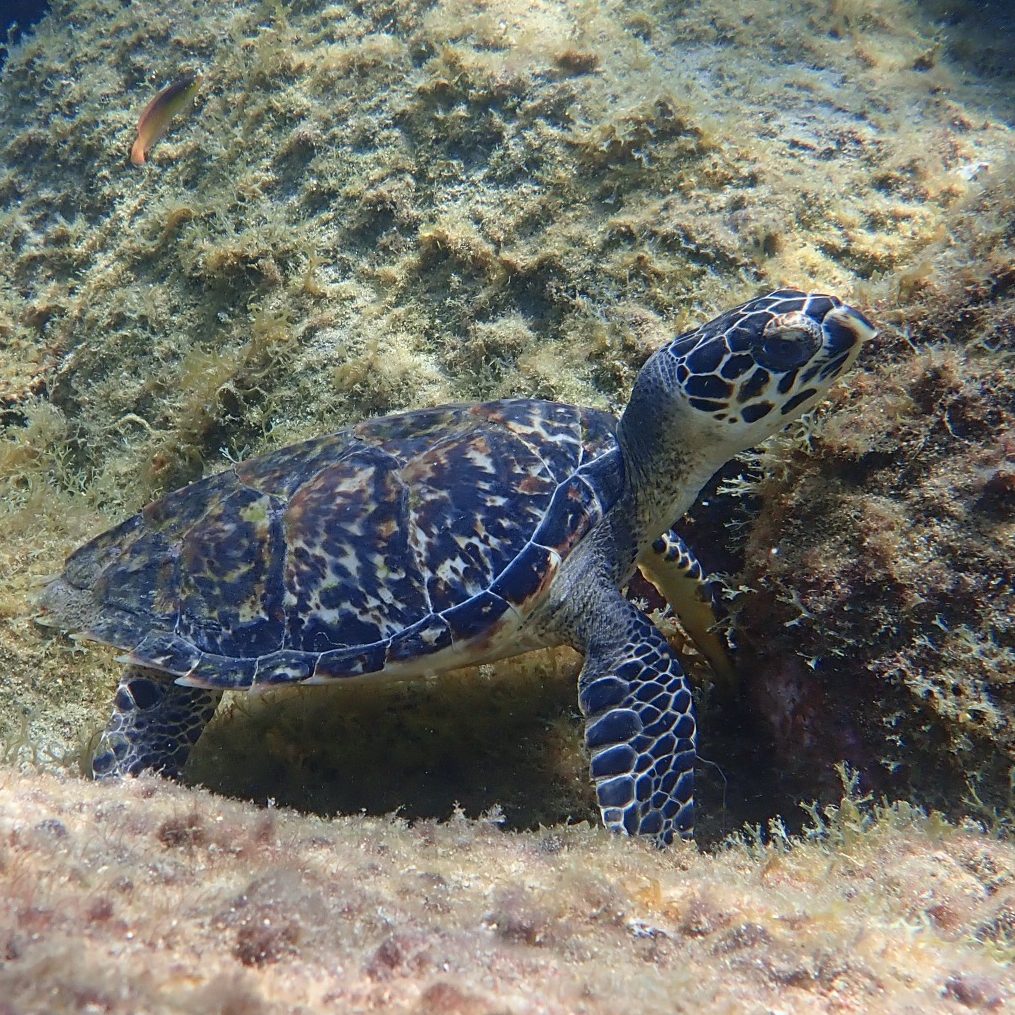
Step 1: Divers and snorkelers submit photographs of sea turtles.
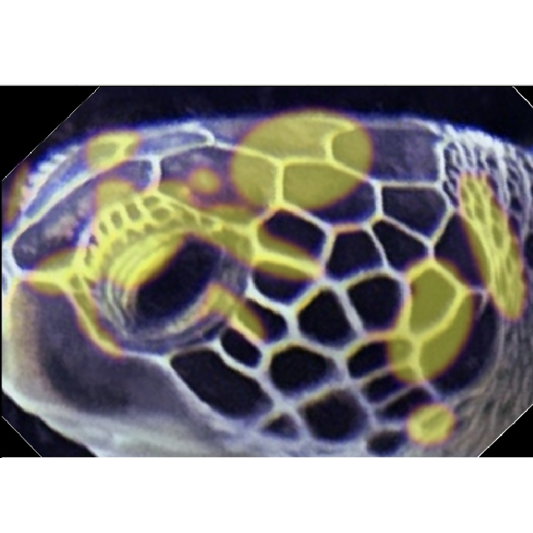
Step 2: The unique facial scale patterns are analysed and compared against existing records.
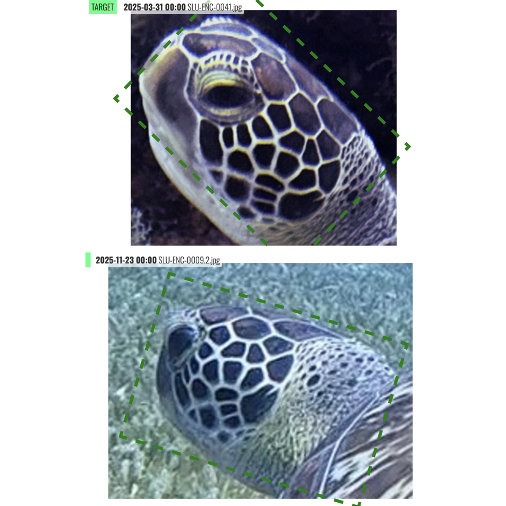
Step 3: Matching photographs allow individual turtles to be identified and tracked over time.
Coral Reef Monitoring
Coral reefs are among the most diverse and valuable ecosystems on Earth, yet many reefs are facing increasing pressure from climate change, pollution and other human activities. Effective conservation and restoration efforts depend on reliable data that can reveal how reef ecosystems are changing over time.
Traditional reef monitoring is often time-consuming, expensive and resource-intensive, limiting the scale and frequency of surveys. Through our Coral Reef Monitoring Project, we combine underwater photography, photogrammetry and citizen science observations to create detailed maps and 3D models of coral reef habitats in Saint Lucia. By integrating modern imaging technologies with community-based data collection and emerging AI-assisted analysis tools, we aim to make reef monitoring more accessible, scalable and cost-effective.
These datasets provide valuable baseline information, help track changes in reef condition over time and help identify coral colonies that show signs of resilience to environmental stress. This information can support more informed conservation and restoration efforts in the future.
Why does it matter?
Detecting Change Over Time
Repeated surveys help identify changes in coral cover, habitat structure and overall reef condition.
Identifying Resilient Corals
Long-term monitoring helps identify coral colonies and reef areas that show signs of resilience to environmental stress, providing valuable information for future conservation and restoration efforts.
Supporting Conservation Decisions
Reliable ecological data can help guide management actions, restoration efforts and conservation planning.
Expanding Citizen Science
Photographs collected by divers and snorkelers contribute valuable information while increasing public engagement in reef conservation.
How does it work?
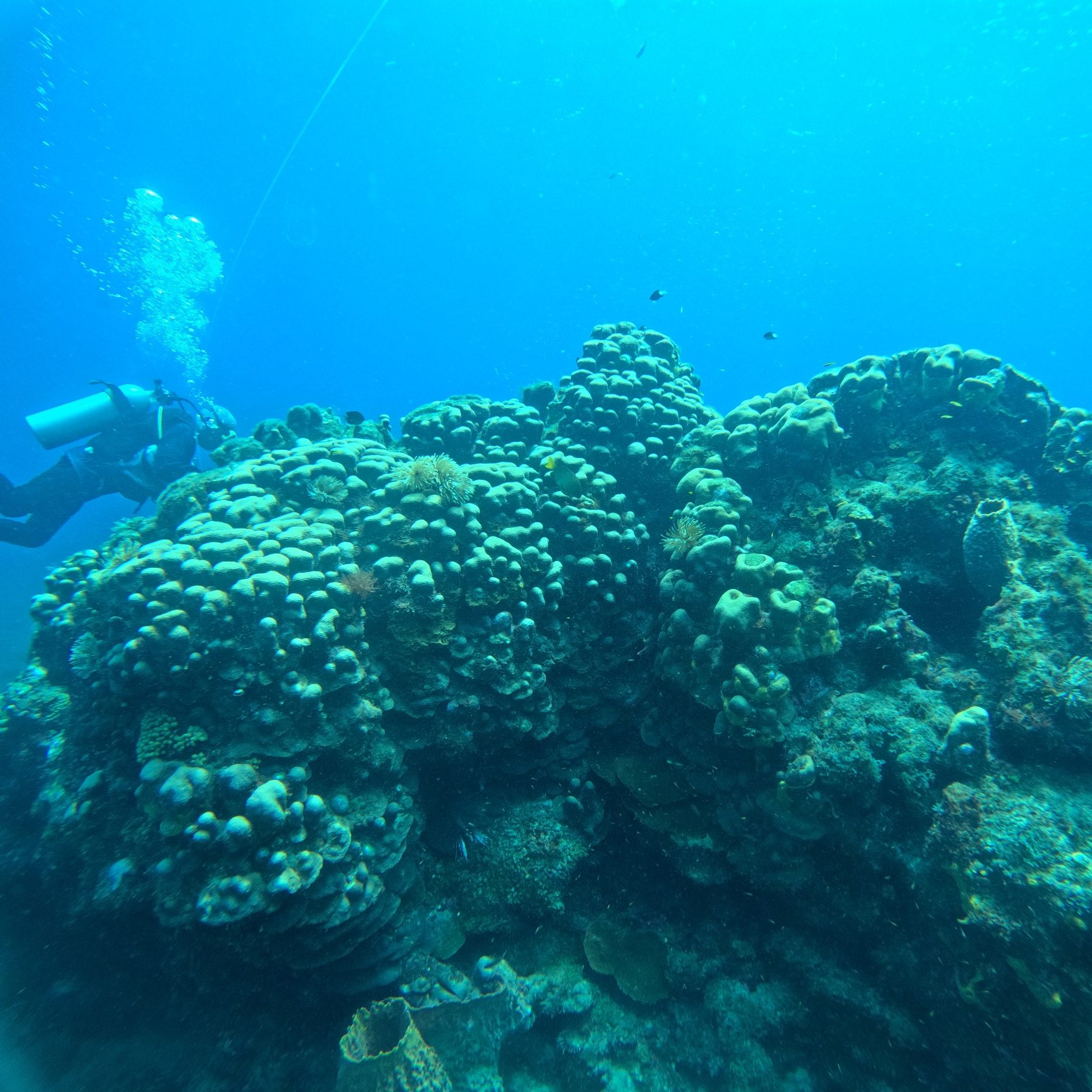
Our team conducts underwater reef surveys and collects photographs and videos across coral reef habitats in Saint Lucia. Additional observations contributed by citizen scientists help expand the dataset and increase monitoring coverage.
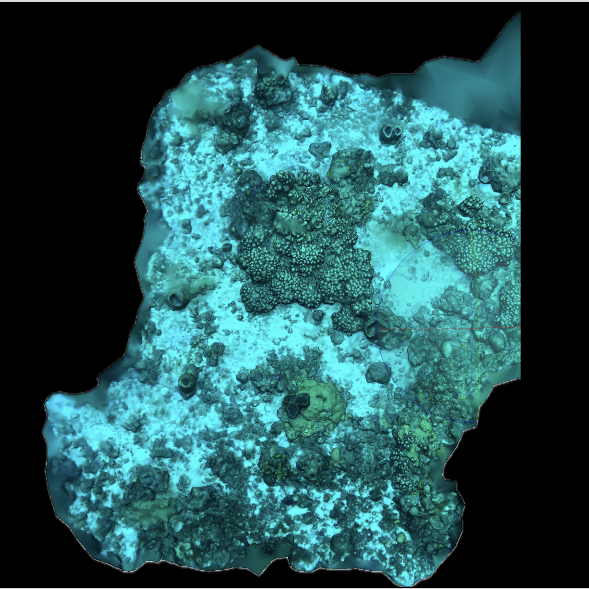
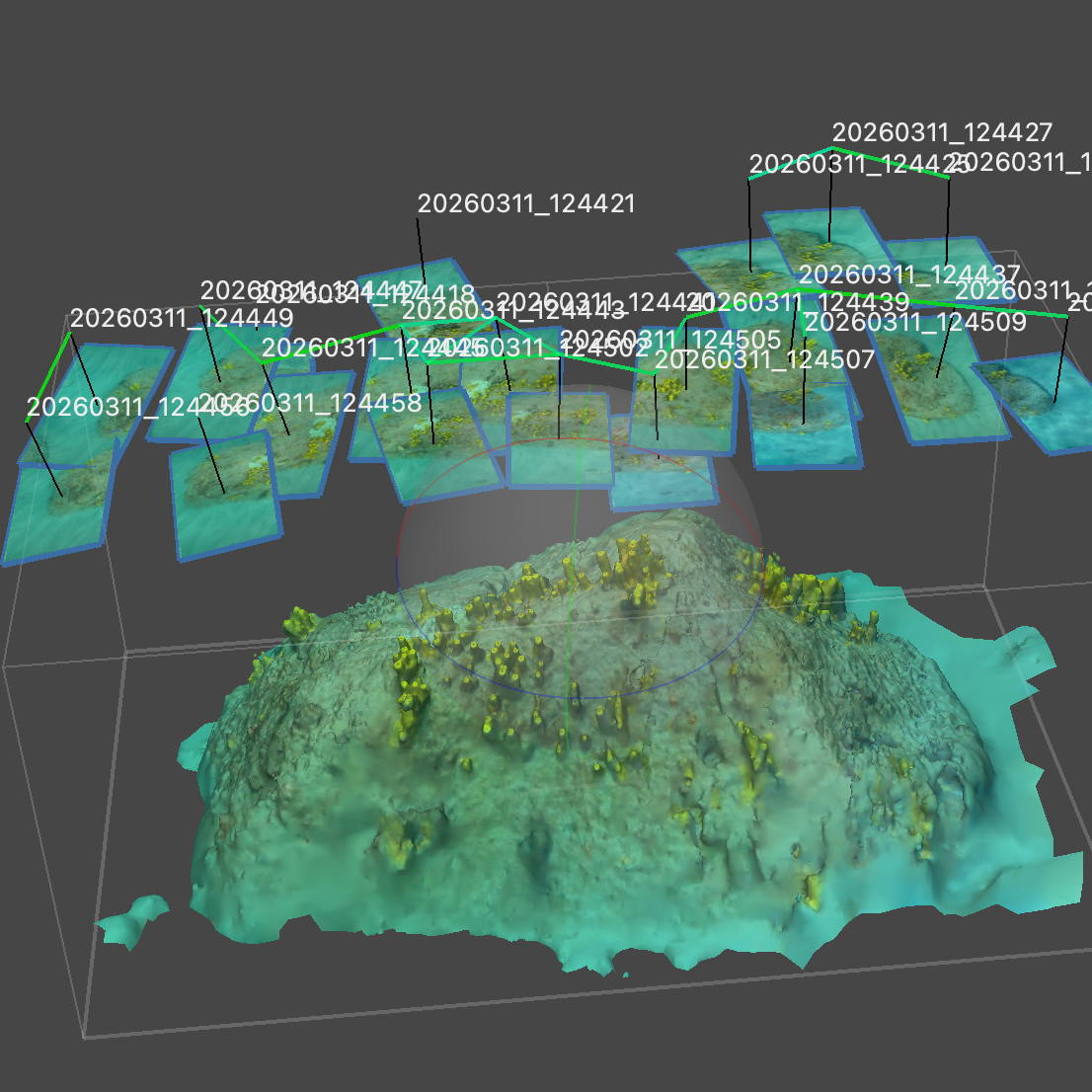
Using photogrammetry, hundreds of overlapping images are transformed into detailed 3D reef models and high-resolution orthomosaics. These products provide accurate representations of reef structure and habitat composition.
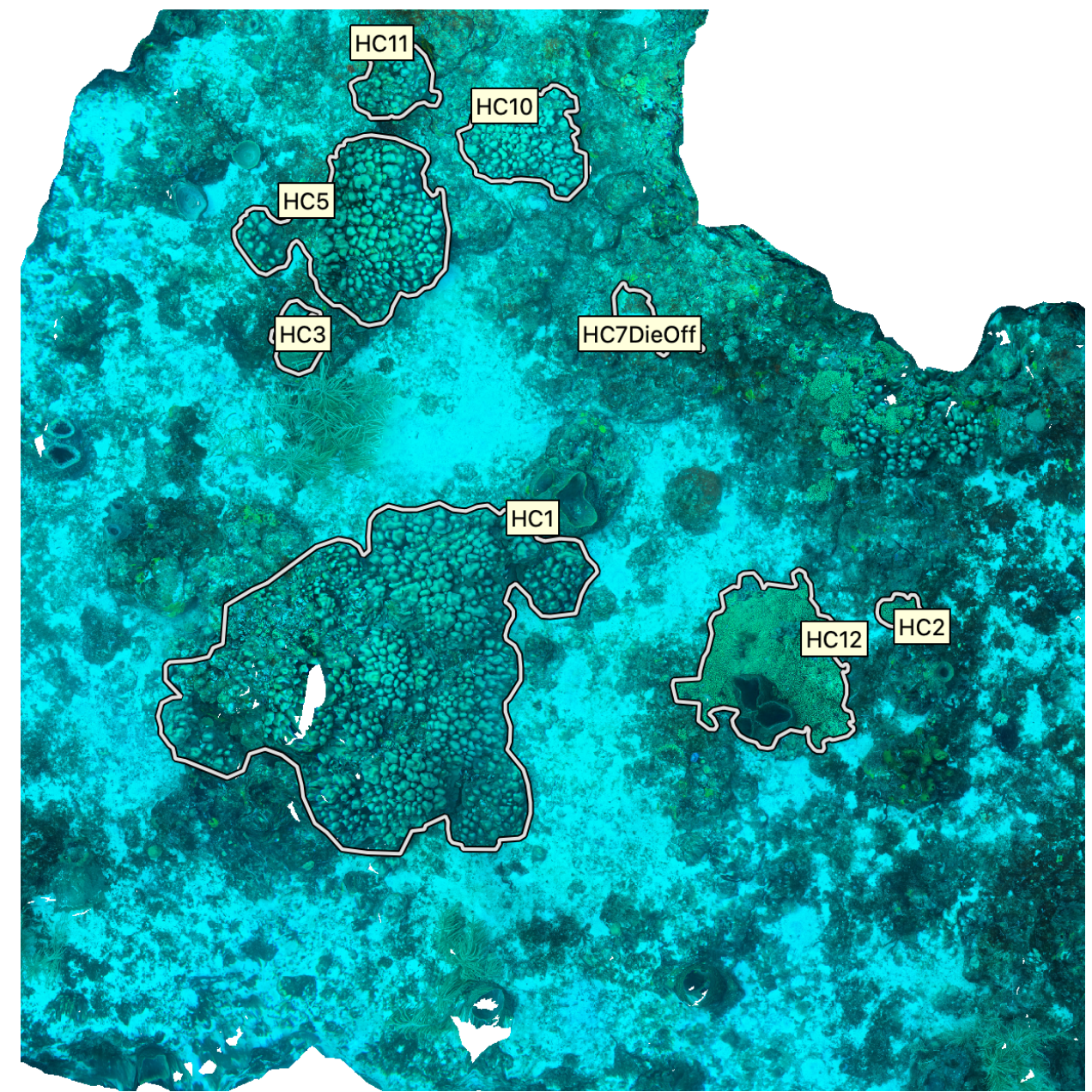
The resulting imagery and maps are analysed to estimate coral cover, identify benthic communities and track ecological changes over time. AI-assisted tools help streamline analysis and make large-scale reef monitoring more efficient and accessible.
Data-Driven Conservation
Remote Sensing and Spatial Analysis
Emerging technologies like satellite imagery, drones, and underwater photography are opening new ways to see and understand ecosystems such as coral reefs, helping us identify areas most at risk.
By combining technological insights with on-the-ground observations, we can streamline monitoring, detect early warning signs, and target conservation and restoration efforts where they matter most.
From satellite imagery to 3D reef models, we incorporate technology to understand and protect ecosystems.
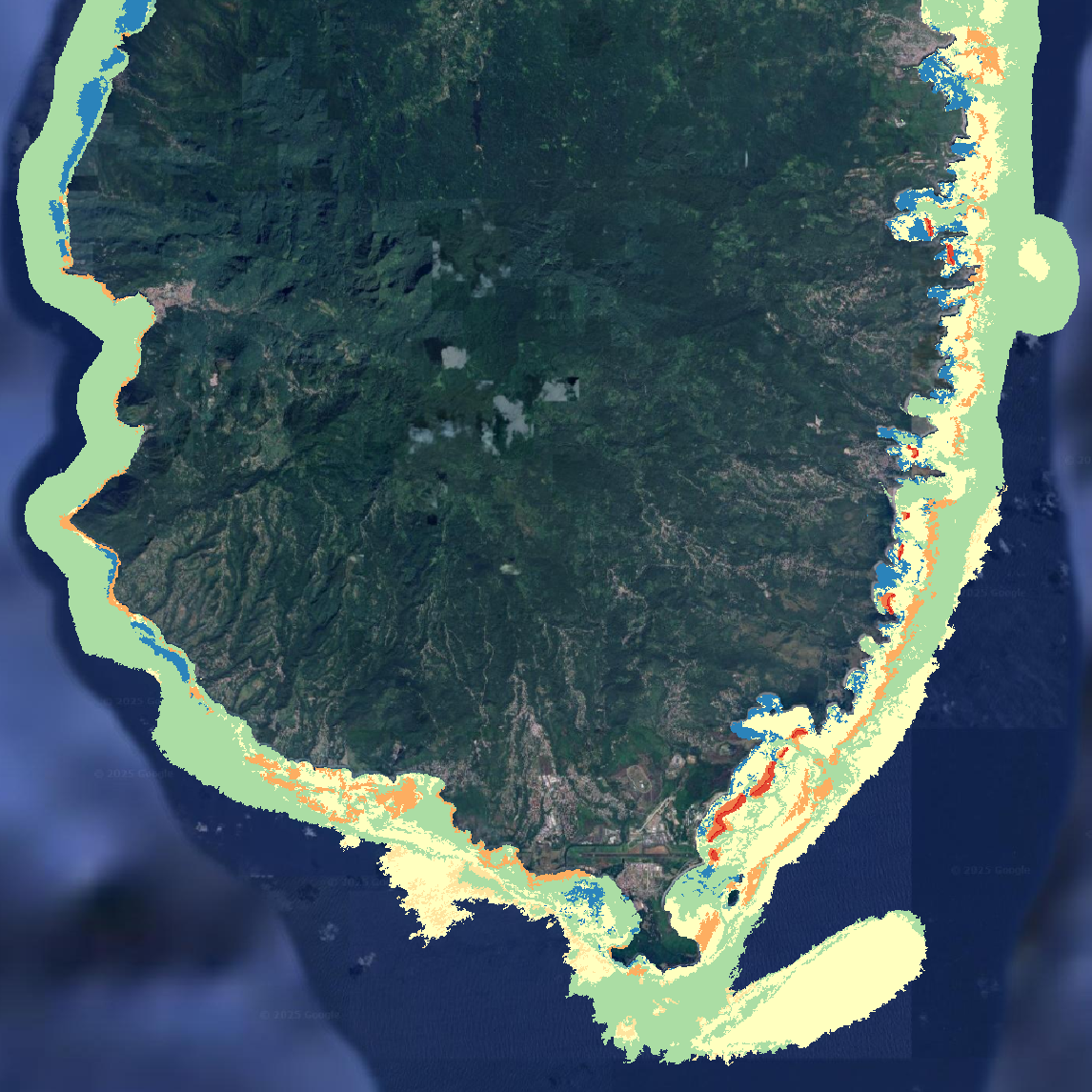
Remote Sensing
Data collected from satellites and sensors allows to get a broader picture of the environments we work in. Landscapes, ecosystems, and human impacts can be monitored over time. Combining this information with geospatial analysis helps us detect trends, understand patterns, and make informed, sustainable decisions.
Photography & Mapping
Using photos and videos to map habitats, such as coral reefs, provides new perspectives on ecological monitoring that would otherwise be time- and resource-intensive. Large datasets can be collected quickly, and innovative technologies now allow highly precise 3D mapping of these habitats.
Machine Learning
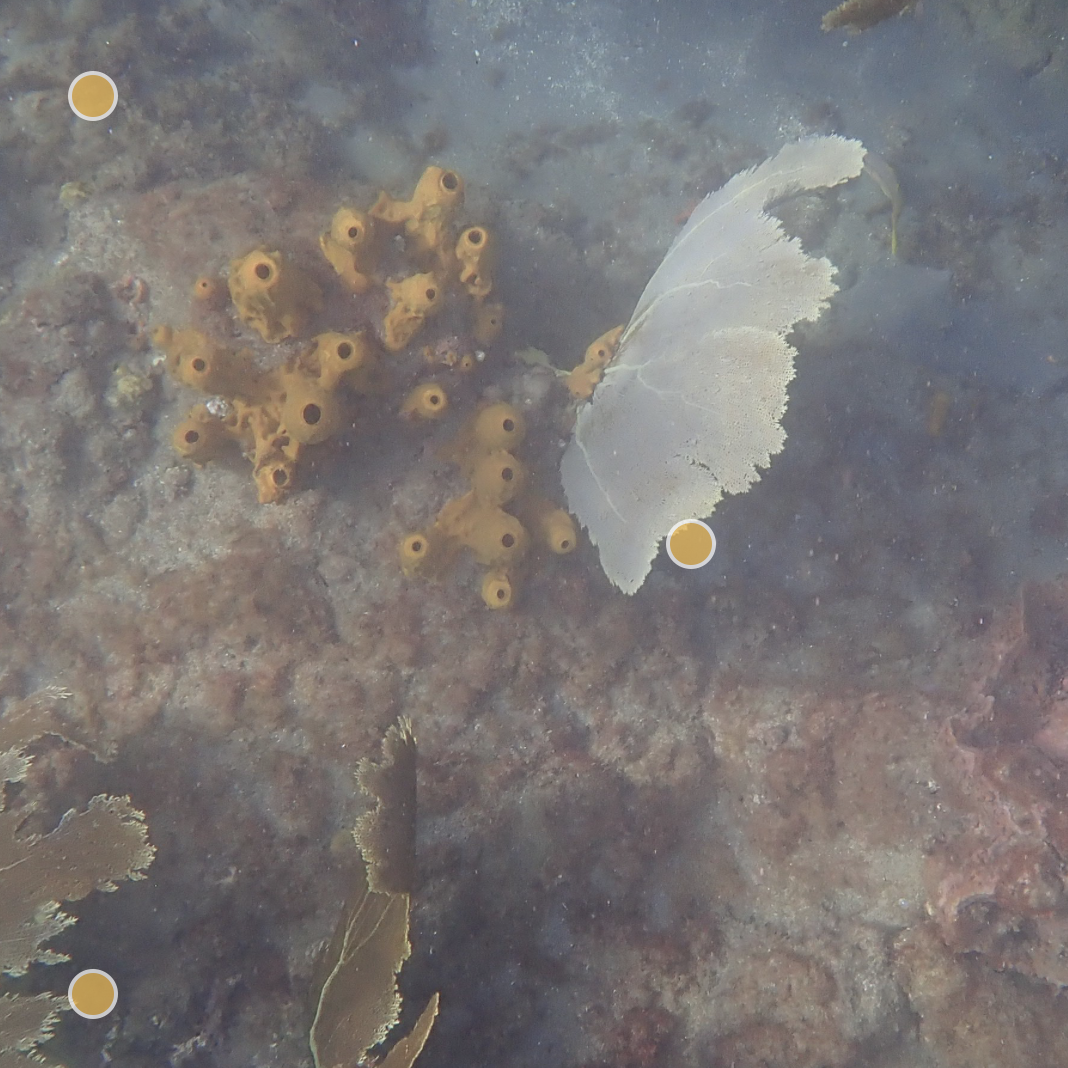
Machine learning and artificial intelligence provide cutting-edge methods to analyze large ecological datasets. Traditional approaches are often time-consuming and less precise, while carefully trained algorithms enable fast, efficient, and highly accurate habitat analysis. Using photos and videos of coral reefs, we can detect patterns and monitor ecosystems effectively.